
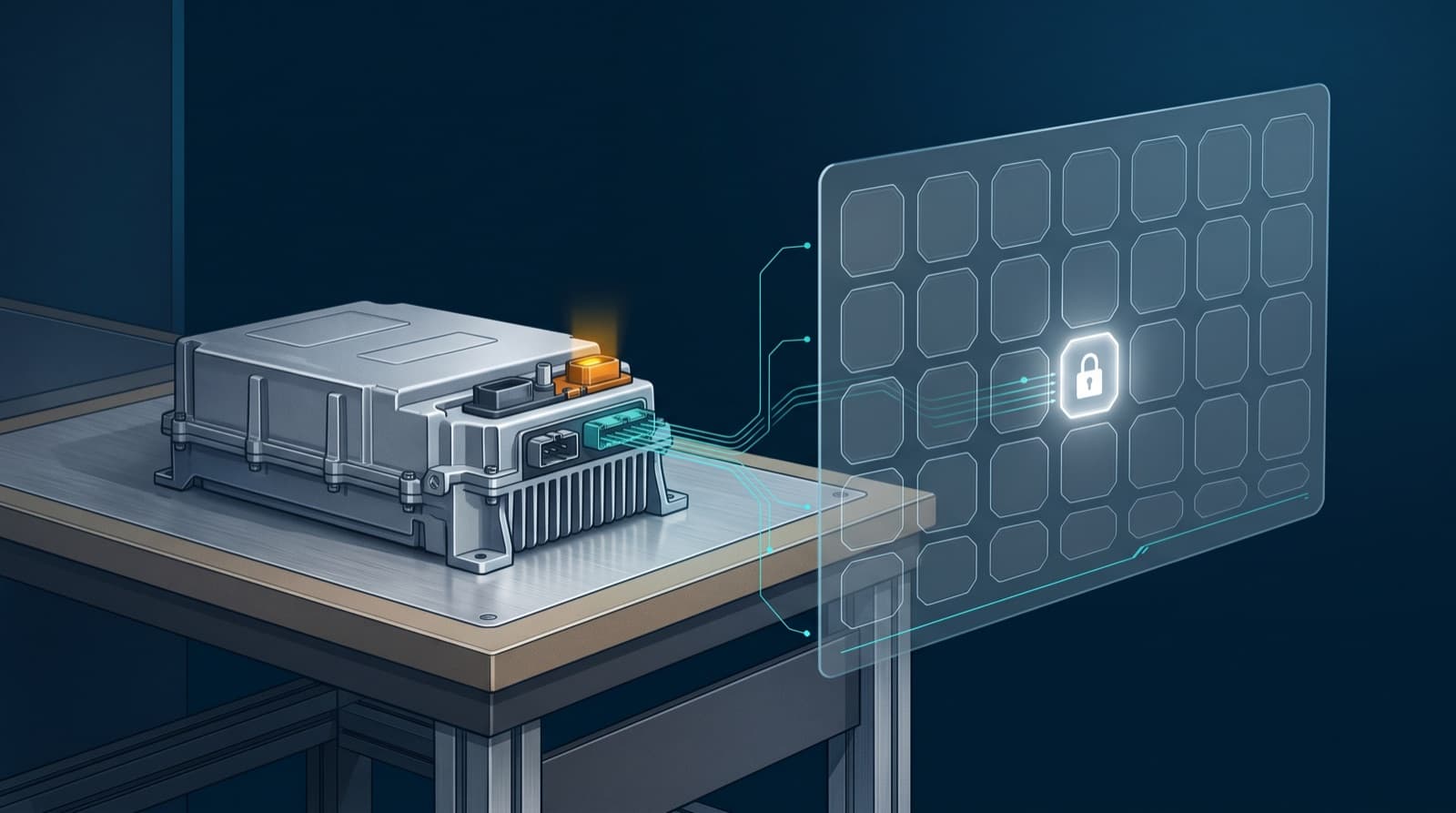
The EU DPP Registry Cannot Register Battery Passports Yet. What to Do Before February 2027
The Commission's Registry guide says battery passport registration is not available yet, because the battery semantic catalogue is still missing. The deadline has not moved. What the FAQ settles, why TÜV SÜD talks about an assurance gap, and the work you can finish now.
The EU Digital Product Passport Registry opened on 20 July 2026. Three months later it still cannot register a battery passport, and the Commission says so in its own documentation. The DPP Registry User Guide for Economic Operators (version 1.03, 16 September 2026) states that "successful registration of DPPs for batteries is not currently available, as the semantic catalogue for this product group has not yet been defined."
The legal date has not changed. From 18 February 2027, EV batteries, light means of transport (LMT) batteries and industrial batteries above 2 kWh placed on the EU market need an electronic battery passport under Article 77 of Regulation (EU) 2023/1542. Battery makers and importers therefore have about four months, a fixed obligation, and a Registry data model they cannot test against yet.
Most of the preparation does not depend on the catalogue, and the Commission has already answered the questions that usually slow SME projects down.
Battery passport registration in the EU DPP Registry: what works today
Two things are possible today. Your organisation can enrol in the Registry, and it can get verified. The Commission's battery passport FAQ explains that verification works through a qualified electronic seal backed by a qualified certificate, or by submitting evidence of identity and establishment. Verification expires with the identification method, and at the latest three years after the first verification.
What does not work yet is the last step: registering a battery passport and getting a successful result. The guide links that gap to the battery semantic catalogue, the set of data definitions the Registry uses to check a passport for completeness. The FAQ describes the future semantic repository in the same terms, as the piece that "will translate the legal requirements into the technical structure used by the DPP Registry."
In practice, enrolment and verification can be finished this month. Successful registration has to wait for the Commission.
What the Commission's battery FAQ already settles
The FAQ (first edition, completed in September 2026) starts with responsibility. The economic operator that places the battery on the EU market registers the passport in the Registry. Another operator can act on its behalf with written authorisation, but the responsible operator keeps responsibility for compliance and for the data.
It also says the Registry does not host the passport, which "is hosted by the economic operator or an operator who has written authorisation to act on his behalf." The Registry stores registration information and metadata.
Then it narrows what day one requires. Carbon footprint, recycled content and due diligence information are not yet required at the start, and the due diligence report follows from August 2027.
That last point helps with planning. The first passport does not have to contain every data point in the regulation. It needs the day-one set, a unique identifier, and hosting you control.
TÜV SÜD and the assurance gap
On 8 October 2026 TÜV SÜD launched a certification mark for Digital Battery Passport systems, as reported by Automotive World. According to the report, the certification covers the Battery Regulation's passport rules, selected ecodesign technical rules, cybersecurity, data integrity and interoperability with harmonised standards.
TÜV SÜD calls the problem an "assurance gap": software vendors cannot prove their own compliance, yet manufacturers carry the legal liability. Christian Theeck, Business Line Manager Energy at TÜV SÜD, described the battery passport as "a safety-critical, regulated system" rather than an IT product.
You do not need a certification mark to start. The point for an SME buyer is that a vendor's own claims are not evidence. When you choose passport software, ask what part of the proof comes from a third party.
What to do before 18 February 2027
The missing catalogue blocks one step. Most of the remaining work can go ahead:
- Enrol and verify now. Sort out your EU Login, the organisation record and the qualified electronic seal (or identity evidence) this quarter. Verification lasts up to three years, so it will not expire before the deadline.
- Decide who hosts the passport: your own system or an operator you authorise in writing. Put the authorisation and the data responsibilities in the supplier contract.
- Collect the day-one data per battery model and unit. Leave carbon footprint, recycled content and due diligence for later, and plan the due diligence report for August 2027.
- Assign persistent unique identifiers and connect them to a QR code or other data carrier, so that registration is only an upload once the catalogue arrives.
- Keep every version with a date you can prove. When the catalogue changes the expected fields, you will need to show what your passport contained and when.
Digital product passport software for SMEs: what to ask a vendor
If you are comparing digital product passport software for SMEs, four questions separate a usable tool from a demo:
- Does it export the files the EU Registry expects, or only a public web page?
- Who hosts the passport, and can you move the data if you change vendor?
- Which proof comes from a third party, and which is only the vendor's claim?
- How does it handle new versions of the passport when the semantic catalogue is published?
On proof, the distinction we use is simple. A qualified eIDAS timestamp gives legal evidence that a given version existed at a given time. A blockchain record adds an independent, tamper-evident log. The two do different jobs, and the timestamp is the one with legal standing.
Hoken Pass gives every published passport a qualified electronic timestamp from InfoCert, a qualified trust service provider under eIDAS, and adds blockchain notarisation on paid plans. Each public passport page exports EU Registry batch files in JSON and XML. The battery passport template is available on the free plan, which includes 3 passports; Base costs €120 per year (pricing).
Frequently asked questions
Can I register a battery passport in the EU DPP Registry today? Not successfully. The Commission's Registry user guide (v1.03, 16 September 2026) says battery passport registration is not currently available because the battery semantic catalogue has not been defined. You can enrol and verify your organisation now.
Has the 18 February 2027 deadline moved? No. EV, LMT and industrial batteries above 2 kWh placed on the EU market from that date need a battery passport under Article 77 of Regulation (EU) 2023/1542.
Does the Registry host my battery passport? No. The passport is hosted by the economic operator or by an operator with written authorisation. The Registry keeps registration information and metadata.
Do I need carbon footprint and due diligence data from day one? No. The Commission's FAQ says carbon footprint, recycled content and due diligence information are not yet required at the start. The due diligence report is required from August 2027.
How long does Registry verification last? Until the identification method expires, and at the latest three years after the first verification.
Is Hoken Pass certified by TÜV SÜD? No. Our third-party evidence is the qualified electronic timestamp issued by InfoCert, a qualified trust service provider under eIDAS, on every published passport.
Sources
- European Commission: DPP Registry and User Guide for Economic Operators (v1.03, 16/09/2026)
- European Commission: EU Digital Product Passport FAQ for Batteries (1st edition, September 2026)
- Regulation (EU) 2023/1542 on batteries, Article 77 (EUR-Lex)
- Automotive World: TÜV SÜD launches Digital Battery Passport certification (08/10/2026)
- TÜV SÜD press release: Digital Battery Passport certification mark (October 2026)
- InfoCert: qualified trust service provider disclosure statement (time stamping)
Start free with 3 passports: hokenpass.com. For a structured overview of ESPR obligations, see the ESPR compliance checklist.